
Creating Productive Layouts in Compact Spaces
How to maximize functionality when square footage is limited. Real techniques from designers who work with tight budgets.
Read MoreSound isolation, visibility, and flexibility matter. Learn what makes a meeting space feel professional without draining your budget.
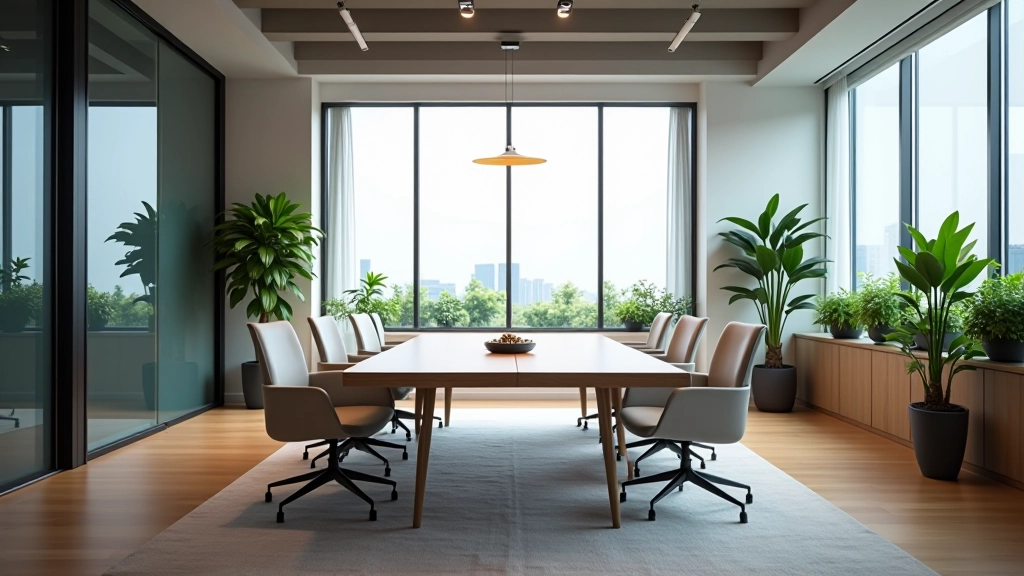
A meeting room isn’t just a room with a table. It’s where decisions happen, ideas clash, and projects come together. The space needs to support conversation without making everyone want to leave after 15 minutes. We’re talking about acoustics that don’t echo, sightlines that work, and flexibility that actually exists.
Here’s the thing: you don’t need a massive budget to get this right. You need to understand what matters and make intentional choices. Let’s break down what separates a meeting room that works from one that frustrates everyone who uses it.
Sound bounces everywhere in an empty room. Hard surfaces — concrete, glass, tile — make voices boom and echo until nobody can hear what anyone’s actually saying. This is the first thing people notice when a meeting room fails.
You don’t need expensive soundproofing. Three things make a real difference: soft surfaces to absorb sound, strategic placement of those surfaces, and awareness of where sound travels. A fabric wall panel absorbs way more sound than bare drywall. Ceiling tiles rated for acoustic performance work better than flat suspended ceilings. And here’s something overlooked — the furniture itself matters. A room with upholstered chairs and fabric-covered panels will feel quieter than one with metal chairs and glass walls.
The goal isn’t dead silence. It’s conversation that doesn’t carry into the hallway and distracting noise that doesn’t creep in from outside. You’re creating a contained acoustic environment where people can actually focus.
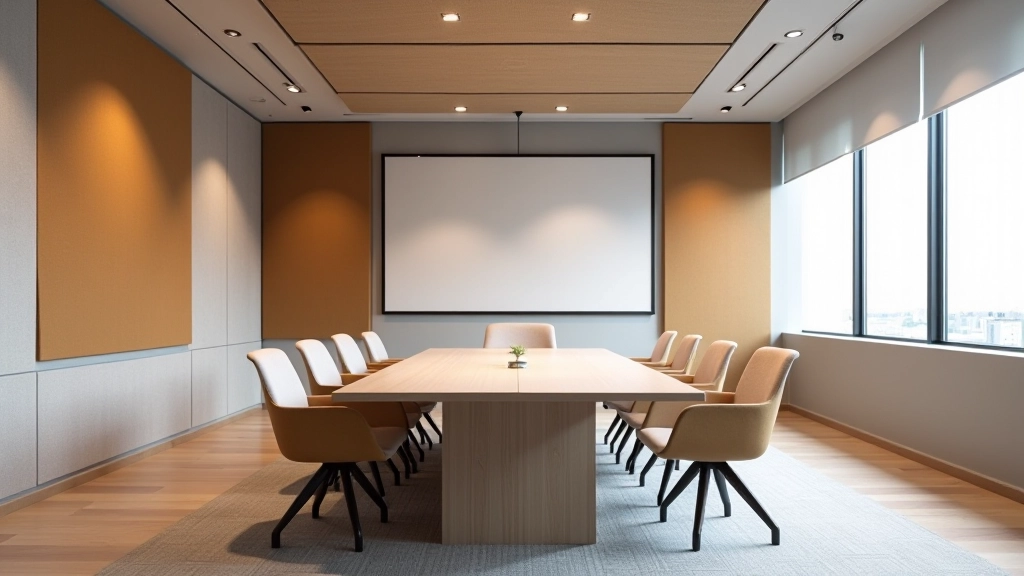
Quick Tip: If your meeting room has lots of glass, offset it with fabric. Glass walls look open but create acoustic chaos. A mix of transparent and opaque surfaces — glass panels with fabric-wrapped frames, for example — gives you visibility without the sound problems.

Can everyone see everyone else? This determines whether a meeting feels collaborative or awkward. If two people are stuck staring at someone’s shoulder the whole time, the dynamic suffers. It’s a small thing that affects the quality of actual conversation.
The table shape matters more than people realize. A rectangular table with 12 people? The folks at the ends might as well be on a different call. Round or oval tables work better for smaller groups — 6 to 8 people maximum. For larger meetings, consider a U-shaped setup where everyone faces inward. It’s not fancy, but it works.
Lighting plays a role too. If half the room is in shadow, you’ll lose people. Natural light is ideal, but consistent overhead lighting works fine. The point is visibility — both literally and figuratively. When everyone can actually see each other’s faces, communication improves.
A meeting room that only works for one type of meeting isn’t really flexible. Some days you’ve got 4 people reviewing designs. The next day it’s 12 people in a presentation. The day after, one person’s on a video call from there while three others listen in.
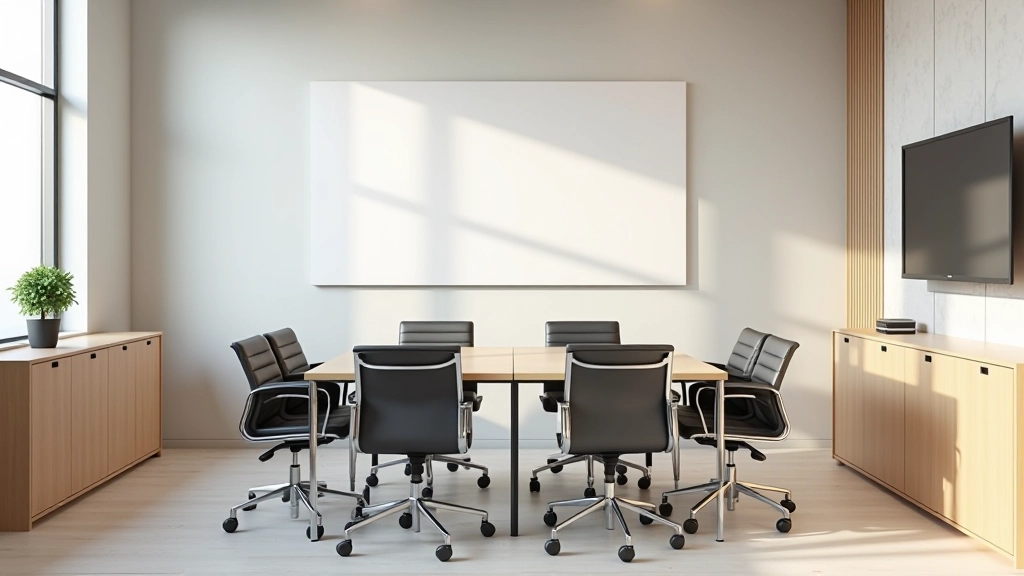
This doesn’t mean expensive modular furniture. It means movable pieces. Lightweight chairs that stack easily. A table that can be pushed to the side. Wall space where you can pin up work. A monitor or two that can display video calls or shared screens — nothing elaborate, just functional.
Storage matters too. If there’s nowhere to put supplies, cables, or the stuff people bring in, the room becomes cluttered fast. A cabinet or shelving — something basic — keeps things organized and makes the space feel professional instead of chaotic.
“The best meeting room is one people actually want to use. If they’d rather meet at their desks or in the hallway, you’ve got a design problem.”

Temperature matters. A room that’s too cold or stuffy makes meetings feel longer than they are. Ventilation that actually works — this isn’t glamorous, but it’s essential. You want fresh air moving through, not stale air sitting.
Color sets the mood without needing to be fancy. Neutral walls with one accent color work well. Avoid anything too bold or bright — it gets fatiguing in a small space. A calm palette helps people focus on the meeting, not the walls.
Cable management and power outlets — place them so people aren’t tripping over cables or reaching across the table to plug in laptops. Small details, but they affect how smoothly things run.
Walk through the space. Listen. Where does sound travel? What echoes? Then layer in soft materials — panels, ceiling tiles, rugs — to control it.
Decide your table shape and seating based on how many people typically meet there. Draw it out. Make sure everyone can see everyone else without moving.
Invest in pieces that aren’t fixed. Lightweight chairs, tables that shift easily, storage that doesn’t take up permanent wall space. This buys you flexibility.
Monitor, speaker, video camera if you need them. Keep it simple and positioned so everyone can see it. Hidden cables make everything cleaner.
Here’s how you know you’ve gotten it right: people choose to use that room. They book it for actual work, not just because they have to. Conversations flow. You don’t lose the thread because of background noise or weird sightlines. And when the group changes size, you can reconfigure in minutes.
A good meeting room is invisible — it doesn’t get in the way. You focus on the work, not the space. That’s the goal. Sound that stays contained. Sightlines that work. Furniture that adapts. Basics like temperature and lighting handled. That’s not complicated. It’s intentional.
This article provides educational information about meeting room design principles and is intended for informational purposes only. The recommendations and guidelines presented here are based on general design practices and may vary depending on your specific space, budget, local building codes, and organizational needs. Actual implementation should consider professional consultation with architects, acousticians, or interior designers familiar with your particular circumstances. Results and effectiveness will vary based on individual applications and site-specific conditions.